About the plant
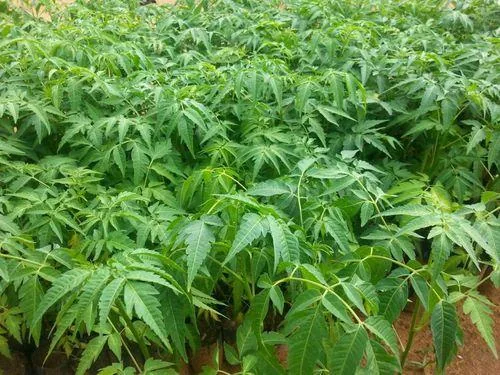
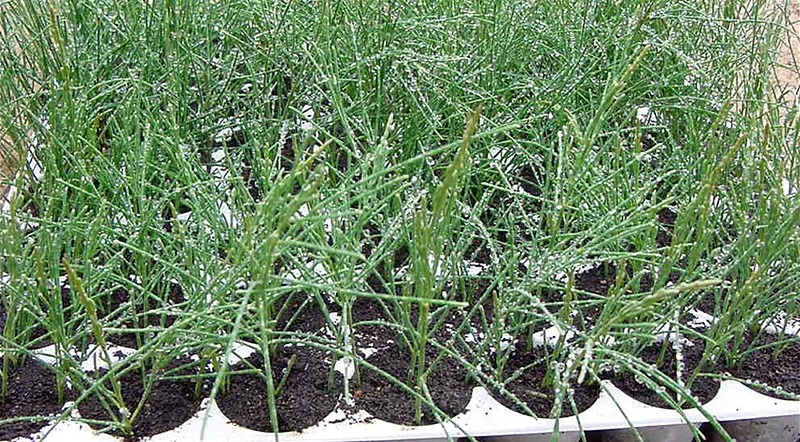
Casuarinas are a group of 17 tree species from Australia, the Indian subcontinent, South-east Asia and the western Pacific islands. In Tamil Nadu and Puducherry they are a favourite farm tree: quick to grow, straight, and in steady demand.
Want an earlier harvest? See Casuarina Kalam: about 140 tonnes an acre in 3.5 years.*
Our research
Dr. Reddiar began research on the traditional casuarina, Casuarina equisetifolia, in 1975. Trees raised from seed varied from 5 kg to 50 kg each by the end of the fifth year, an average of 35–50 tonnes an acre, and they lodged in rain, storms and strong wind.
He then raised seedlings of the hybrid Casuarina junghuhniana, brought from Thailand to the Chengalpattu, Marakkanam and Kanchipuram areas of Tamil Nadu in 1951 by the Tamil Nadu Forest Department. Being open-pollinated and diploid, its seedlings still varied, giving 50–75 tonnes an acre in 5 years.
Not satisfied, he selected a high-performing mother plant, identified a sterile tetraploid, and standardised its propagation by shoot tips and in-vitro micropropagation, using gamma irradiation at the Kalpakkam atomic research station.
Farmers who grew it found that each tree weighed about 100 kg after 5 years, giving about 200 tonnes an acre*, and about 90% of the plants grew uniformly.
Uses
- Pulpwood for the paper and rayon industries
- Fuel for thermal power stations: about 4,900 calories of energy on combustion, comparable to lignite
- Support poles in building construction
What comes next
We have developed a new high-yield variety, Casuarina Modi, and 11 more casuarina varieties are in the final stages of research and development.
* When cultivated as per our instructions.